Home / Custom Made Bags / Equipment bags
Custom Utility &
Equipment Bags
Bags designed around the equipment your team carries.
Keep the right items together, make your kits easier to carry and give your team a bag that suits the job.
From compact parts pouches to larger equipment carry bags, Claytons starts with your contents, dimensions and working requirements.
Send your quantity, reference image and delivery postcode.
Around 50 years
Experience in bag supply
Coffs Harbour team
A direct Australian contact
Australia-wide
Business orders and delivery
What does your equipment bag need to do?
The way a bag is packed, opened and carried should guide its design. A technician taking a kit between appointments has different requirements from a supplier packaging loose components with a product.
Keep service tools and accessories together
For maintenance teams, installers and field service businesses, start with the items used on a typical job. Consider which tools need their own space, which accessories are easily misplaced and what should be accessible first.
A clear contents list helps us discuss a layout that works for the complete kit.
Make equipment easier to transport
An awkwardly shaped item needs more thought than a larger bag. Tell us how it sits when packed, where it can be gripped and whether it travels with cables, leads, instructions or spare components.
Include any clearance needed to lift the equipment in and out without catching on the opening.
Organise parts, issue packs and workplace gear
Smaller custom bags can keep related components together for assembly, servicing or distribution. For staff equipment and PPE storage, explain whether each person receives the same set of items or needs a different combination.
Identification and a consistent packing layout can make it easier to distinguish one kit from another.
Start with what
goes inside.
You do not need a finished technical drawing to start. These details give us a practical starting point for a custom equipment bag quote.
Build your equipment bag brief
What must fit inside?
List the contents and their packed length, width and height. Include accessories.
What will the complete kit weigh?
Provide the expected loaded weight and identify any concentrated or awkward loads.
How will it be carried?
Explain whether it moves by hand, over a shoulder or between a vehicle and a work area.
What needs to stay separate?
Identify loose parts, documents, cables or items that need their own space.
How should it open?
Describe the access needed and whether users need to see the whole contents at once.
Where will it be used?
Tell us about storage, transport, cleaning and exposure conditions.
How should it be identified?
Supply your logo and any team, kit or product identification requirements.
If you already have a bag that is nearly right, tell us what needs to change. A difficult opening, unsuitable depth or inconvenient handle position can be more useful information than a general request for a “stronger bag”.
Match the construction to the contents
The fabric is one part of the decision. The bag’s shape, seams, base, handles and closure also need to suit the way it will be used.
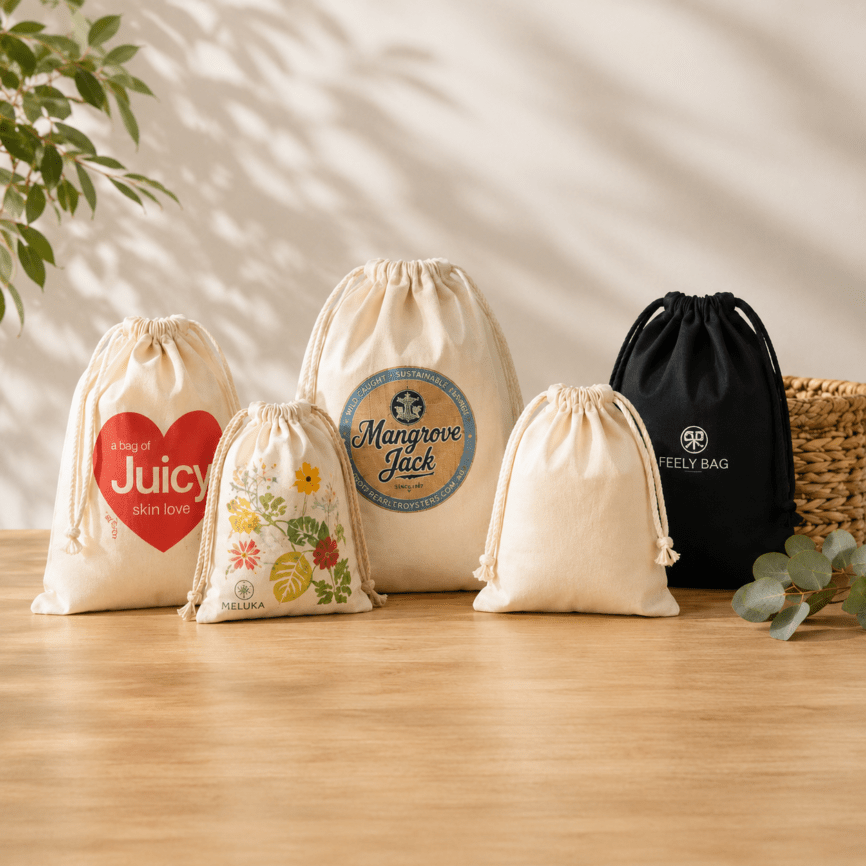
For custom canvas equipment bags, describe the expected load and frequency of use so the material and reinforcement requirements can be assessed together. For lighter components or issue packs, a simpler pouch or drawstring format may meet the brief.
Claytons can assess requests for changes to dimensions, carrying options, openings and internal organisation. Available combinations will depend on the design and quantity.
Where an application needs a particular load rating, protective lining or performance requirement, include it in the initial enquiry so suitability can be established before the order proceeds.
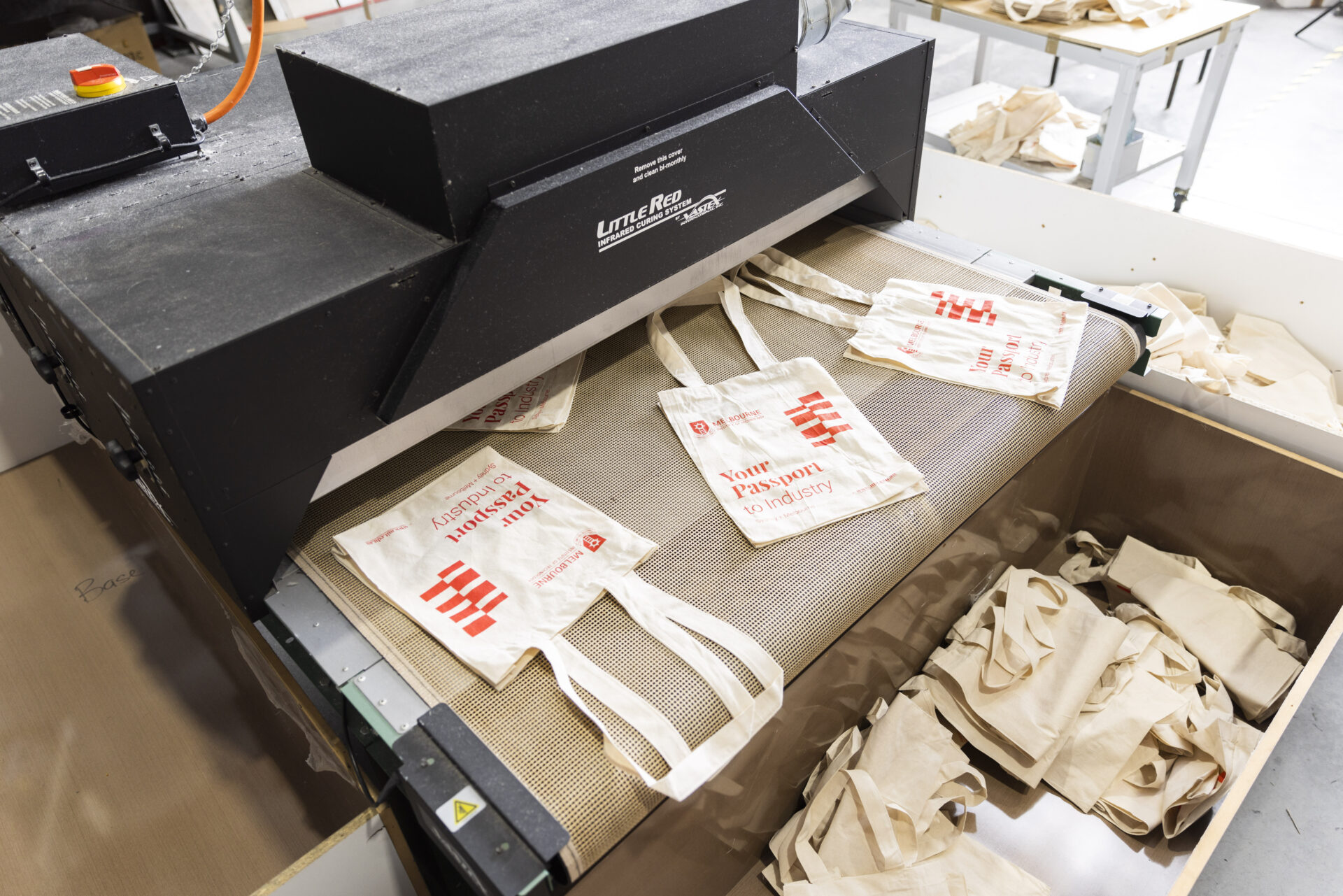
Bag printing at Claytons. Suitability confirmed for your design.
Put your branding where it will be seen
A branded utility bag can carry your business identity alongside the equipment it holds. Share the logo position you have in mind and whether the branding needs to remain visible when the bag is packed or carried.
Claytons offers custom bag printing, with the method selected for the fabric, artwork and order. Print placement should be considered alongside seams, pockets and closures so the finished layout is practical.
For equipment supplied to customers, include the product name or kit identification requirements in your brief as well as your business logo.
Start with the kit, then confirm the bag
Send the contents and measurements
A photograph with the items laid out can help explain what belongs in the bag. Include the loaded weight and your intended quantity.
Discuss the design and quote
We’ll assess the requirements and identify what needs confirming, including materials, layout, branding and delivery.
Agree the details before ordering
Ask about suitable sample or pre-production checks for your project. A packed-fit check is particularly useful when a bag must accommodate a specific item.
If the equipment or contents change, let us know before confirming the specification. Small changes to a kit can affect the opening, depth or carrying arrangement.
Why discuss your equipment bags with Claytons?
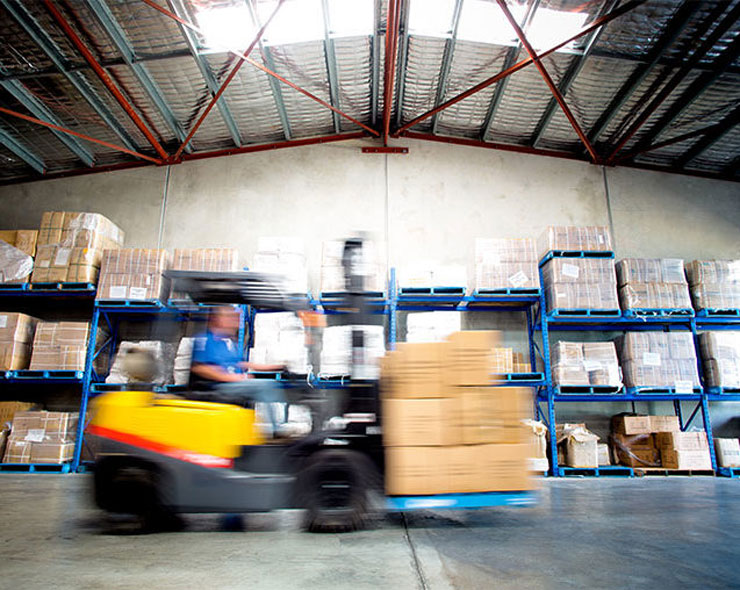
Claytons, Coffs Harbour, NSW.
Decades of experience in bag supply
Claytons has supplied bags and holdalls to Australian organisations for around 50 years. Our team can help turn the way a bag will be used into a clearer purchasing brief.
A real team in Coffs Harbour
Discuss your order with the Claytons team at 17 Forge Drive, Coffs Harbour, NSW. You have a direct contact for questions about your bag, artwork and delivery requirements.
Support for custom requirements
Our custom-made bag service covers specialist applications as well as everyday carry bags. Tell us which details are essential and which can be adjusted to meet your budget or quantity.
Custom equipment bags supplied across Australia
Claytons works with businesses in Sydney, Melbourne, Brisbane, Perth, Adelaide, Canberra, Hobart and Darwin, as well as regional and remote locations across Australia.
Our team is based in Coffs Harbour on the NSW Mid North Coast. Include the delivery postcode, quantity and required arrival date with your enquiry so production and freight can be considered together.
For orders going to several branches, depots or project locations, provide the destination list when requesting your quote.
Questions about custom utility and equipment bags
Have a requirement that is specific to your order? Talk it through with our team.
Can you make a bag around an existing piece of equipment?
We can assess a custom bag based on the item and how it will be carried. Send its measurements, packed weight and photographs, including any accessories that need to travel with it. Tell us about space needed around the item as well as its external dimensions.
Can I request compartments or separate storage for parts?
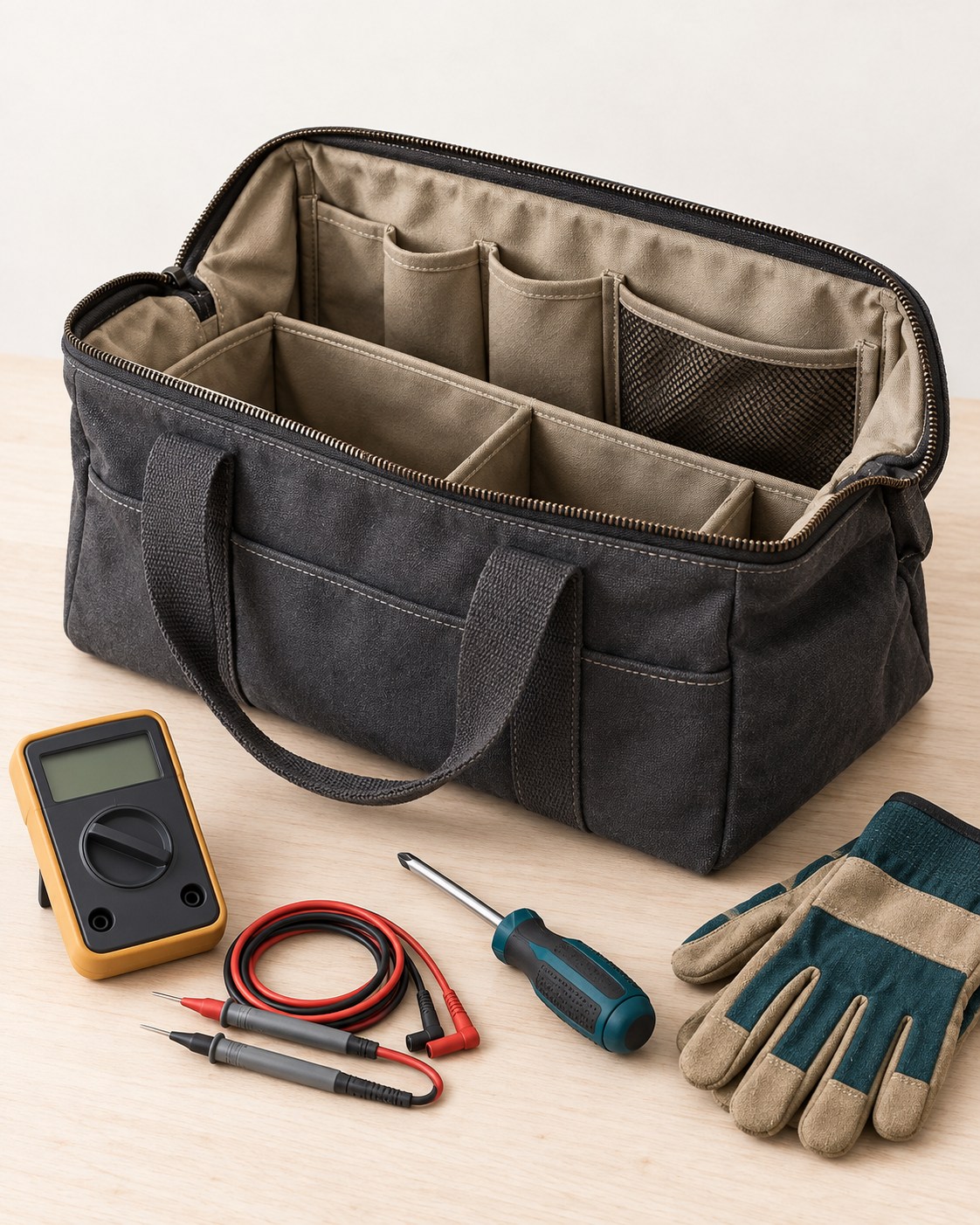
Yes. Describe what needs to be separated and how often each item is accessed. Pockets, dividers and storage sections can be considered as part of the custom design, subject to the construction and order requirements.
Are custom equipment bags suitable for heavy tools?
Suitability needs to be assessed for the particular load. Share the complete kit weight, the shape of the contents and how the bag will be handled. Any required carrying capacity must be confirmed for the proposed construction.
Can the bags include our business logo?
Yes. Send your artwork with the enquiry. We’ll help confirm the suitable branding method and placement for the selected material and design.
What is the minimum quantity?
Custom equipment bag minimums depend on the design, materials and production requirements. Provide your required quantity, even if it is an estimate, and we’ll confirm the available approach when assessing the project.
How long will a custom order take?
The design, materials, quantity and approval requirements affect production timing. Tell us your required arrival date and postcode at the start. We’ll discuss the expected schedule for your order, including delivery.
Show us what needs
to go inside.
Send your contents list, approximate dimensions, quantity, branding requirements and delivery location. An existing bag, drawing or photograph is a useful starting point.